
Insights
Single-player AI: why most teams still use AI alone, and what changes when they don't
Almost everyone at work uses AI now, and almost all of it happens in private chats. This has a hidden cost. What would it look like if we collaborated with AI in the open?
Svet Bajlekov, CEO & Co-Founder · 3 min read
Published
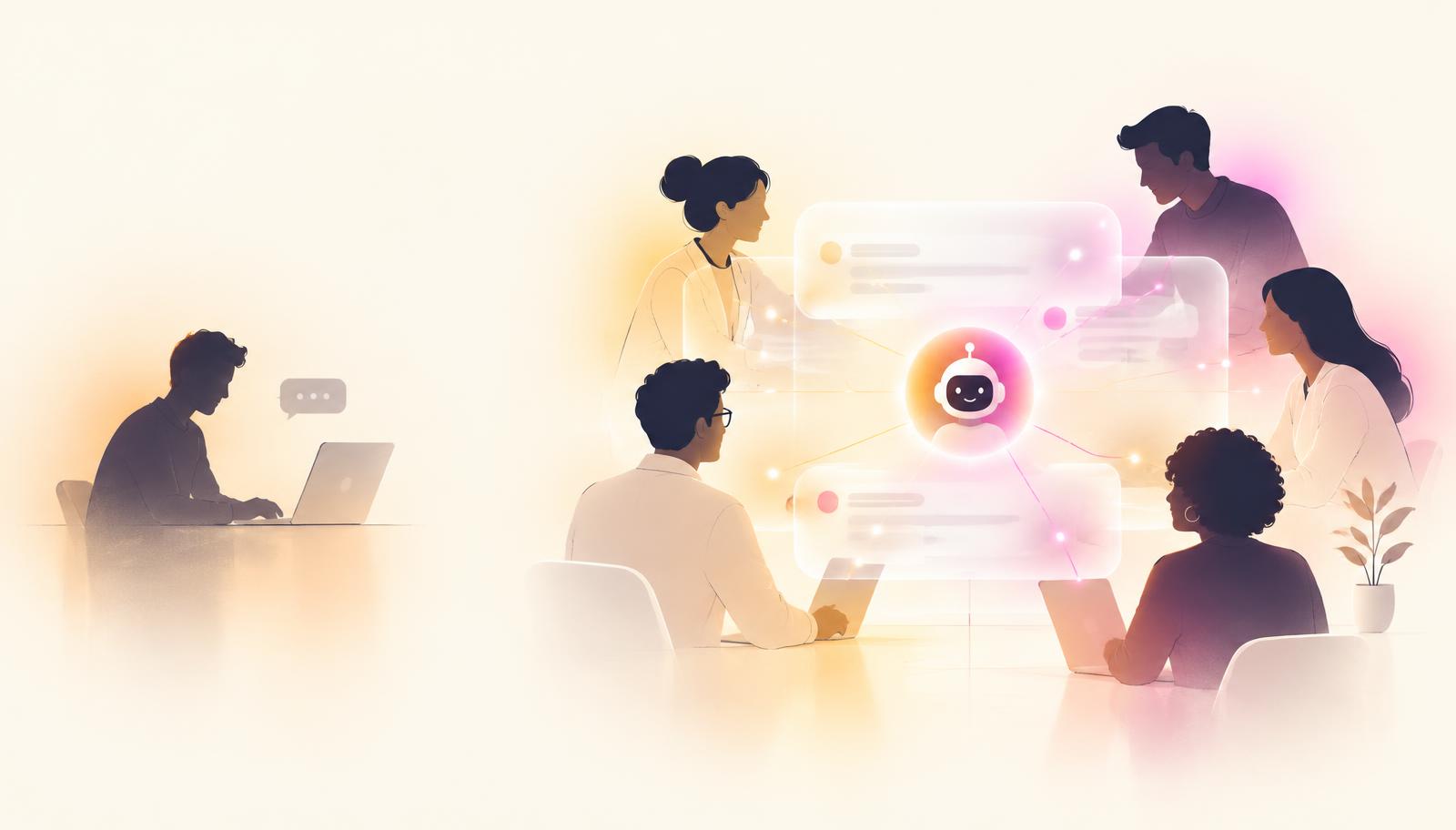
Most of us use AI every day at work. Almost all of it happens in private.
Someone needs a summary for the monthly portfolio review. They paste a raw data export into Claude, fiddle with the prompt a bit, and when they’re happy with the output, copy the result into a shared document. A couple of other colleagues make final tweaks. On Thursday it goes to the investment committee.
By then nobody can say what parts were written by the AI vs a human, what numbers were sense-checked by a person - or indeed which raw export this was based on. The original chat sits in one person's account.
Next month someone else does the same thing, with a different export and a different set of prompts.
I call this single-player AI. It's how most teams work today, including - until recently - ours.
For personal work it's fine; I use AI this way every day. But doing it in a team setting sooner or later leads to a world of pain.
You can't retrace any of the work. A private chat keeps the reasoning on one laptop - so when a number looks off, tracing the logic becomes an exercise in digital archeology. Did the person who pasted in the figures cross-check them? Do they stand behind them? In a shared document, “drafted by a model” and “checked by Anna” look the same.
Not just that, but everyone starts from scratch, taking their own agent on their individual AI journey. Each person explains the portfolio to their own assistant: site conventions, contract terms…which inverters were swapped last year, and why. Five people end up with five slightly different versions of the truth.
Multiplayer AI
The alternative is to treat AI agents as members of the team. Bring them into the team's existing communication channels, where everyone collaborates. Make the agents a part of that. Give them an identity, a workspace, appropriate access rights.
The human’s prompting and the agent’s work happen in the open. The brief, the raw data, the reasoning, and the outputs – available for all to see. The agent can create documents and own them. Hand-off is explicit and transparent. Everything can be traced, easily verified, and replayed the next time.
That's how we built Ray, our AI coworker. He lives in our customers' Microsoft Teams or Slack channels. His morning check of the portfolio is posted in the channel, with the evidence attached. Questions to him, and his answers, stay in the thread. When he drafts a report or an O&M claim, someone approves it, and the thread shows who. If data is missing, he says so.
Ray learns on the job, and brings his learnings the next time a related assignment or task comes up. His unified data connections and skills are a source of truth shared across the team. What’s more, team members get to learn from each other, and share best practices.
Where to start
You don't need new software to get out of single-player mode. Four habits help:
- When posting AI-assisted work, include details on how it was derived – e.g. based on what prompts and data sources.
- Connect assistants to shared data instead of feeding them exports.
- Clearly label what was AI generated vs crafted by a human.
- Specify what has been reviewed and approved, vs what still needs a closer look.
In some sense most of the technology is already there. What's usually missing is a team agreement on how people and AI work together. Though ultimately, I do see a rapidly shifting landscape in terms of where and how this collaboration takes place. When it comes to streamlining this, I think we’re just getting started!
More on Ray: /ray